 CaixaUnica
Open Finance is here: connect your banks and cards to CaixaUnica
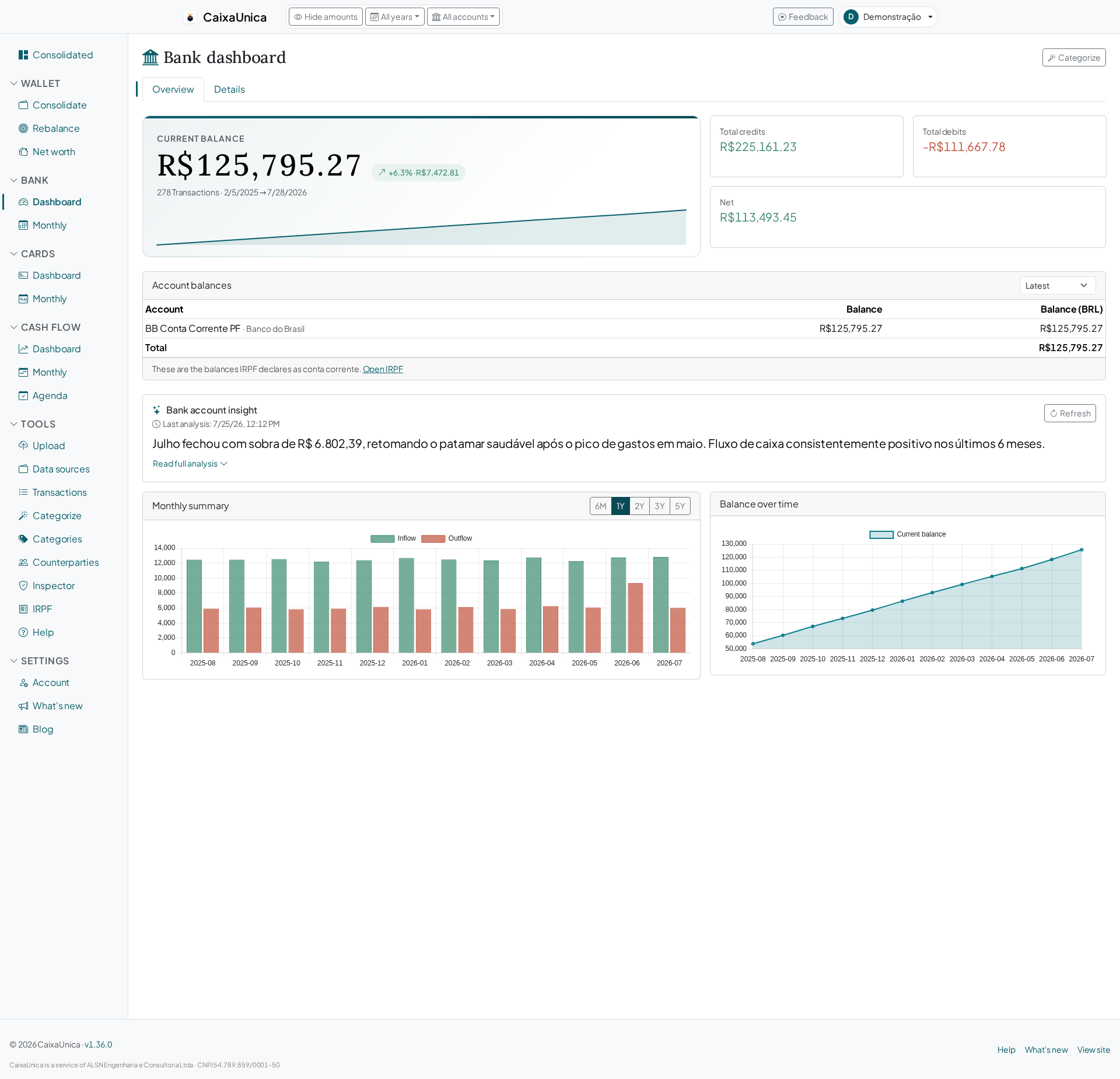
Until now, getting your data into CaixaUnica meant exporting each bank's statement and uploading the file. It works — but it's a chore, and you have to remember to repeat it every month. Not anymore: with Open Finance, you connect a bank once and your transactions flow in automatically, always up to date.
What changes in practice
- Connect and forget. Linked an account? Transactions start flowing in automatically — no exporting, no uploading, no monthly repeat.
- Accounts and cards together. One connection brings in both the checking account and the bank's credit card, each in its own module.
- Everything you already love still works. Categorization, spending by category, balances and dashboards all run on the data that arrives via Open Finance, exactly like imported statements.
How to connect (takes a minute)
- In CaixaUnica, go to connect bank and pick your institution.
- You're taken to your own bank's environment to authorize the sharing — that's where you confirm, with your bank's security.
- Done. CaixaUnica starts syncing your transactions automatically.
Safe by default
Open Finance is regulated by the Central Bank of Brazil, and you stay in control:
- CaixaUnica doesn't store bank credentials — the connection lives with a regulated aggregator and access is read-only: we see the transactions, we never move anything.
- Explicit, revocable consent: you choose what to share and can cancel anytime.
- Only institutions authorized by the Central Bank take part.
Want to understand the ecosystem behind it? We wrote a full guide: what Open Finance is and why it changes your financial life.
What about investments?
They flow in on their own too — and it's the most underrated part. Positions in Tesouro Direto (government bonds), CDB, RDB, LCI/LCA, and investment funds show up in your portfolio with an up-to-date balance and reconstructed cost. We cover the details in the article on investments via Open Finance.
Stocks and real estate funds (FIIs) still come in through the B3 reports — the most complete source for average price and corporate actions. The two paths live side by side in the same portfolio: what arrives automatically from your institutions and what you import from your brokerage.
Get started
Connect your first bank and watch your transactions show up on their own.
Create your free 14-day account — every module unlocked, no card details required.