 CaixaUnica
How much did your portfolio actually earn? Consolidated returns, no spreadsheet
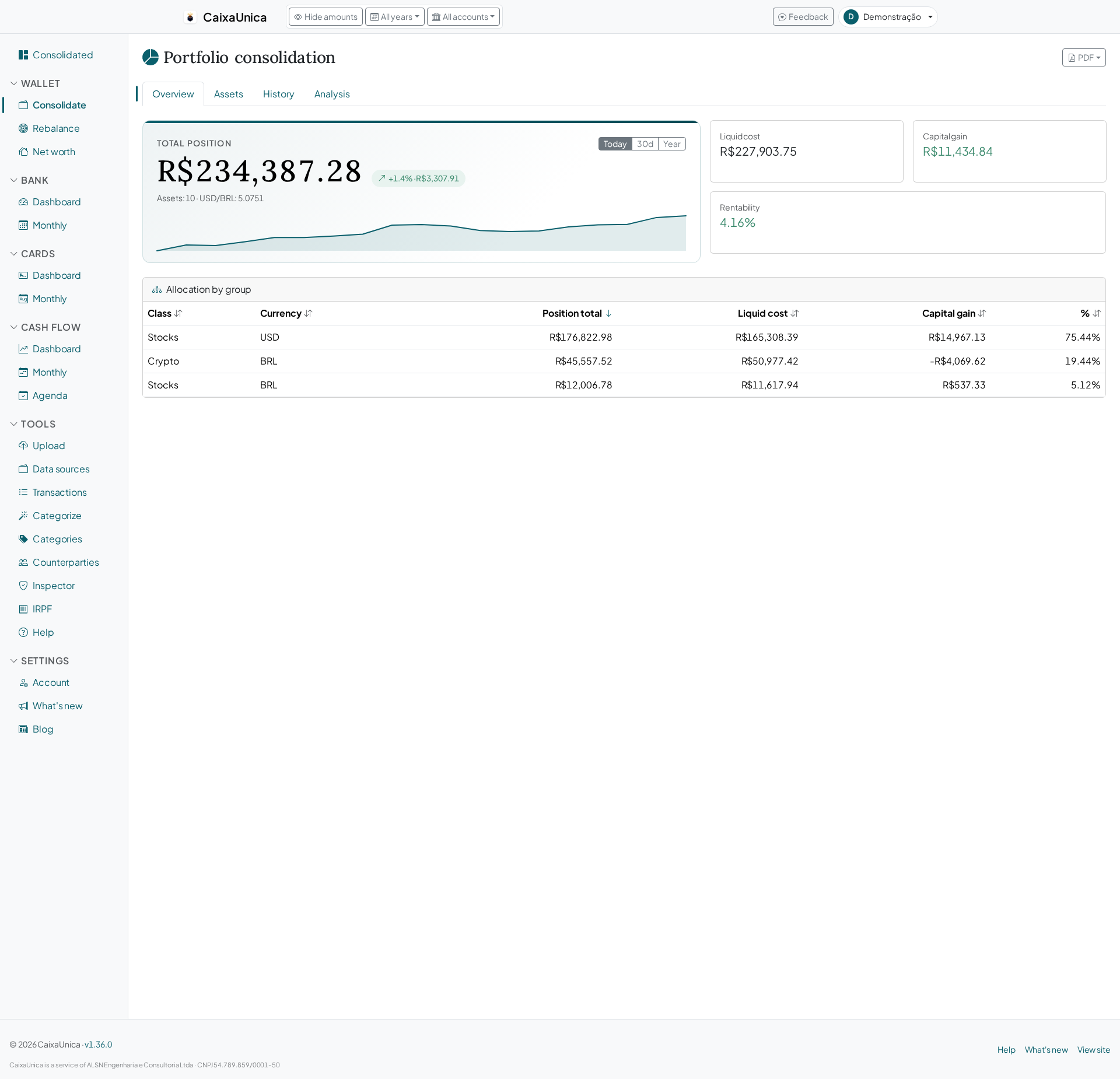
"My portfolio is worth R$120k." Great — but how much did you earn? A balance is not a return. If you contributed through the year, received dividends, bought dollars on Avenue and traded some crypto, you can't answer that off the top of your head. CaixaUnica answers it for you — from the same statements you already import.
Why adding up the balance misleads
Today's value mixes two things that have to be separated for you to know how you're doing:
- What you put in (contributions) — new money isn't profit.
- What it earned (appreciation + income) — that's the number that matters.
If you contributed R$30k over the year and the portfolio rose R$35k, the real return was R$5k — not R$35k. Without splitting contributions from gains it's easy to fool yourself both ways: thinking you earned a lot when you only deposited, or missing poor performance hidden behind contributions.
What CaixaUnica computes
From your B3, Avenue and Binance statements — and the positions that arrive on their own via Open Finance — consolidated, the portfolio shows:
- Average cost per asset — the basis for everything. Rebuilt from your buys, including crypto-to-crypto swaps (alt → BTC), where manual math fails most.
- Net worth over time, so you see the curve, not just today's point.
- Income — dividends and distributions summed per asset (Avenue's, in dollars, converted at the day's rate).
- FX exposure — how much of your portfolio is in dollars, already in the total.
- Per-asset performance — which positions pull the result up or down.
In whatever currency you want to see
Holding Brazilian stocks and US ETFs? You pick the display currency and the whole portfolio is shown in it — no converting dollars by hand every time you check. Each asset's native values are preserved; the conversion is for reading only.
Conservative where it needs to be
Returns go badly wrong when a buy price is missing — the classic case of an asset that arrived via transfer with no recorded cost. In those cases CaixaUnica doesn't invent profit: it avoids booking the full amount as a gain and offers a per-asset table where you inject a reference price, leaving the rest of the portfolio intact.
How to use it
- Import your B3, Avenue and Binance statements on the Upload page.
- Open the Portfolio and see consolidated net worth, evolution and performance.
- Click an asset for its detail — average cost, income and history.
- Adjust the display currency if you hold dollar positions.
Stop figuring out your return by adding three apps in your head. Try it free for 14 days — every module unlocked, no card details required.